The 4 Pillars of SEO: Technical SEO, On-Page SEO, Off-Page SEO, and Local SEO
Search Engine Optimization (SEO) is one of the most effective ways to increase your website’s visibility on search engines like Google. However, SEO is much more than simply adding keywords to your content. It involves optimizing different aspects of your website to improve user experience, build trust, and achieve higher search rankings.
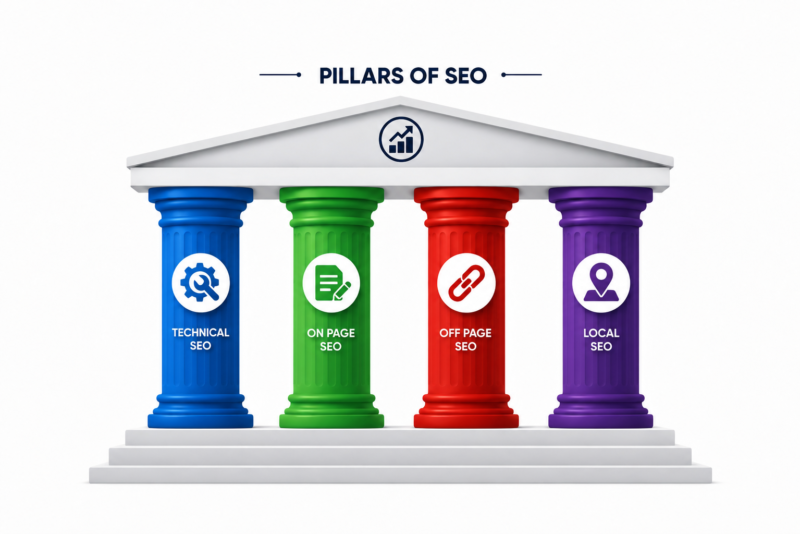
A successful SEO strategy is built on four essential pillars:
- Technical SEO
- On-Page SEO
- Off-Page SEO
- Local SEO
Each pillar plays a unique role, and together they create a strong foundation for long-term organic growth.
1. Technical SEO
Technical SEO focuses on improving the technical aspects of your website so search engines can easily crawl, understand, and index your pages. Even the best content may struggle to rank if your website has technical issues.
Why Technical SEO Matters
A technically optimized website:
- Loads faster
- Is easier for search engines to crawl
- Provides a better user experience
- Improves search rankings
- Reduces indexing errors
Key Elements of Technical SEO
Website Speed
Page speed directly affects both user experience and search rankings. Slow websites often have higher bounce rates because visitors leave before the page fully loads.
Ways to improve speed include:
- Compressing images
- Using modern image formats like WebP
- Enabling browser caching
- Minifying CSS, JavaScript, and HTML
- Choosing reliable hosting
Mobile Friendliness
Most internet users browse websites on mobile devices. Google primarily uses the mobile version of your website for indexing.
Ensure your website:
- Uses responsive design
- Has readable text without zooming
- Features mobile-friendly navigation
- Loads quickly on smartphones
XML Sitemap
An XML sitemap lists the important pages on your website and helps search engines discover them more efficiently.
Benefits include:
- Faster indexing
- Better crawl efficiency
- Easier discovery of new content
HTTPS Security
HTTPS encrypts data transferred between your website and visitors, making browsing secure.
Advantages include:
- Increased trust
- Better security
- Small ranking advantage in Google
Crawlability and Indexability
Search engines must be able to crawl your pages before they can index them.
Maintain good crawlability by:
- Fixing broken links
- Removing redirect chains
- Using a clean URL structure
- Avoiding duplicate content
- Properly configuring robots.txt
2. On-Page SEO
On-Page SEO refers to optimizing individual web pages so they rank higher and provide better value to visitors.
Unlike Technical SEO, which focuses on website infrastructure, On-Page SEO focuses on the content and HTML elements of each page.
Why On-Page SEO Matters
Well-optimized pages help search engines understand:
- What the page is about
- Which keywords it targets
- Whether it satisfies user intent
Key Elements of On-Page SEO
Keyword Optimization
Research relevant keywords and naturally include them in:
- Title
- Headings
- URL
- First paragraph
- Body content
- Image alt text
- Avoid keyword stuffing.
Meta Tags
Optimize:
- SEO Title
- Meta Description
- Well-written meta tags improve click-through rates from search results.
Internal Linking
Internal links connect one page of your website to another.
Benefits include:
- Better navigation
- Improved crawlability
- Passing authority between pages
- Keeping visitors engaged
High-Quality Content
Content remains one of Google’s strongest ranking factors.
Good content should be:
- Original
- Helpful
- Well-structured
- Up-to-date
- Easy to understand
Image SEO
Optimize images by:
- Using descriptive filenames
- Adding alt text
- Compressing large images
- Choosing appropriate formats
3. Off-Page SEO
Off-Page SEO includes activities performed outside your website to improve its authority, reputation, and credibility.
Google views backlinks from trusted websites as votes of confidence.
Why Off-Page SEO Matters
Strong Off-Page SEO helps:
- Increase domain authority
- Build trust
- Improve rankings
- Drive referral traffic
Key Elements of Off-Page SEO
Link Building
Earn backlinks from high-quality, relevant websites through:
- Guest posting
- Resource pages
- High-quality content
- Outreach campaigns
- Quality is more important than quantity.
Digital PR
Digital PR involves earning mentions from:
- News websites
- Industry publications
- Online magazines
- Journalists
- These mentions often generate powerful backlinks.
Influencer Outreach
Collaborating with industry experts or influencers can:
- Increase brand awareness
- Generate backlinks
- Drive qualified traffic
- Brand Mentions
- Even unlinked mentions of your brand can help build online authority and trust.
Social Signals
Although social media is not a direct ranking factor, sharing valuable content can:
- Increase visibility
- Drive website traffic
- Encourage natural backlinks
4. Local SEO
Local SEO helps businesses appear in location-based searches such as:
- Restaurants near me
- Best dentist in Patna
- Digital marketing agency in Delhi
It is especially important for businesses serving customers in specific geographic areas.
Why Local SEO Matters
Local SEO helps you:
- Reach nearby customers
- Increase foot traffic
- Generate local leads
- Improve visibility in Google Maps
Key Elements of Local SEO
Google Business Profile
Create and optimize your Google Business Profile with:
- Business name
- Address
- Phone number
- Business hours
- Photos
- Services
- Keep the information updated.
NAP Consistency
NAP stands for:
- Name
- Address
- Phone Number
Ensure these details remain consistent across all websites and business directories.
Local Citations
List your business on reputable directories to improve local visibility.
Examples include:
- Justdial
- IndiaMART
- Sulekha
- Yelp
Reviews and Ratings
Positive customer reviews improve credibility and can influence local rankings.
Encourage satisfied customers to leave genuine reviews.
Local Keyword
Use location-specific keywords naturally throughout your website.
Examples:
- SEO services in Patna
- Best bakery in Mumbai
- Digital marketing course in Delhi
How the Four Pillars Work Together
Think of SEO as building a house.
Technical SEO — Creates a strong foundation.
On-Page SEO — Builds valuable rooms filled with useful content.
Off-Page SEO — Earns trust and recommendations from others.
Local SEO — Helps nearby customers find your business.
Ignoring any one pillar can limit your overall SEO performance.
Common SEO Mistakes to Avoid
- Ignoring technical website issues
- Publishing thin or duplicate content
- Stuffing keywords unnaturally
- Buying low-quality backlinks
- Neglecting mobile optimization
- Forgetting image optimization
- Inconsistent business information
- Ignoring customer reviews
- Not updating old content
- Failing to monitor website performance
Final Thoughts
SEO is not a one-time task but an ongoing process that requires continuous improvement. By focusing on the four pillars—Technical SEO, On-Page SEO, Off-Page SEO, and Local SEO—you create a well-rounded strategy that improves search visibility, enhances user experience, and drives sustainable organic traffic.
Whether you’re a beginner learning SEO or a business owner looking to grow your online presence, mastering these four pillars will help you build a website that both search engines and users love.
Start by strengthening your website’s technical foundation, create high-quality content, build trustworthy backlinks, and optimize for local searches. Over time, these efforts can lead to higher rankings, increased traffic, and long-term success.